Trace the ancient path of the Holy Family through Egypt, from the Coptic churches of Cairo and the monasteries of Wadi El Natrun to the sacred caves of Middle Egypt and the temples of Luxor.
Your Journey Route
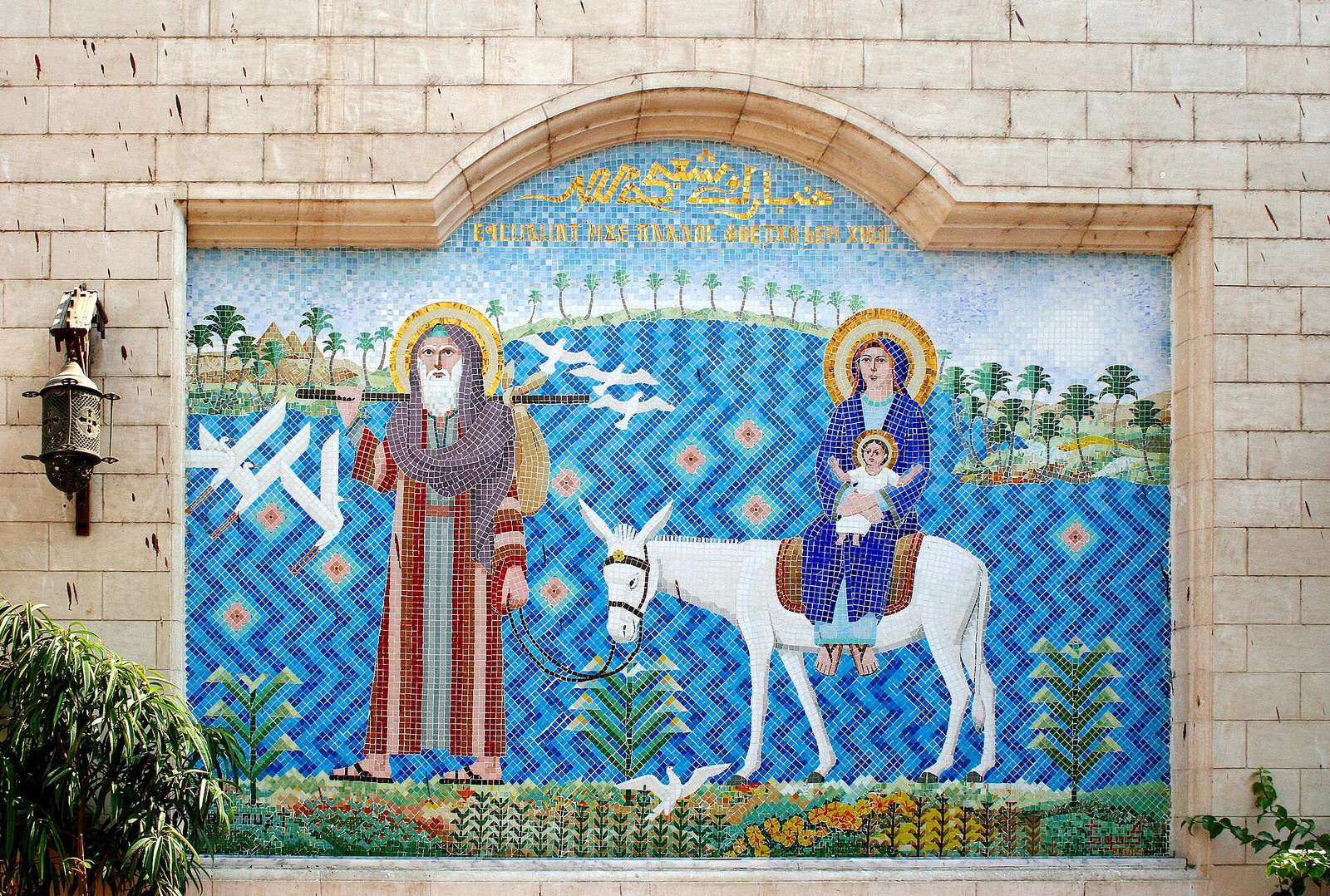
When the Holy Family fled to Egypt, the route they took became one of the most important pilgrimage paths in the Christian world. This eight-day journey traces that route in full: the Coptic churches of Old Cairo built over their resting places, the four ancient monasteries of Wadi El Natrun, the holy caves of Middle Egypt and the great temples of Upper Egypt where Christianity and the Pharaonic world overlap. A specialist Coptic heritage guide accompanies you throughout, providing theological, historical and cultural context that makes each site come alive.
Arrive Cairo, private transfer to your hotel in the Old Cairo area. Welcome briefing with your specialist Coptic heritage guide. Evening: Zeitoun district, where the Church of the Virgin Mary stands on the site of a remarkable 1968 apparition of the Virgin, one of the most widely witnessed Marian appearances in history and deeply important in the Coptic tradition. Dinner is optional this evening.
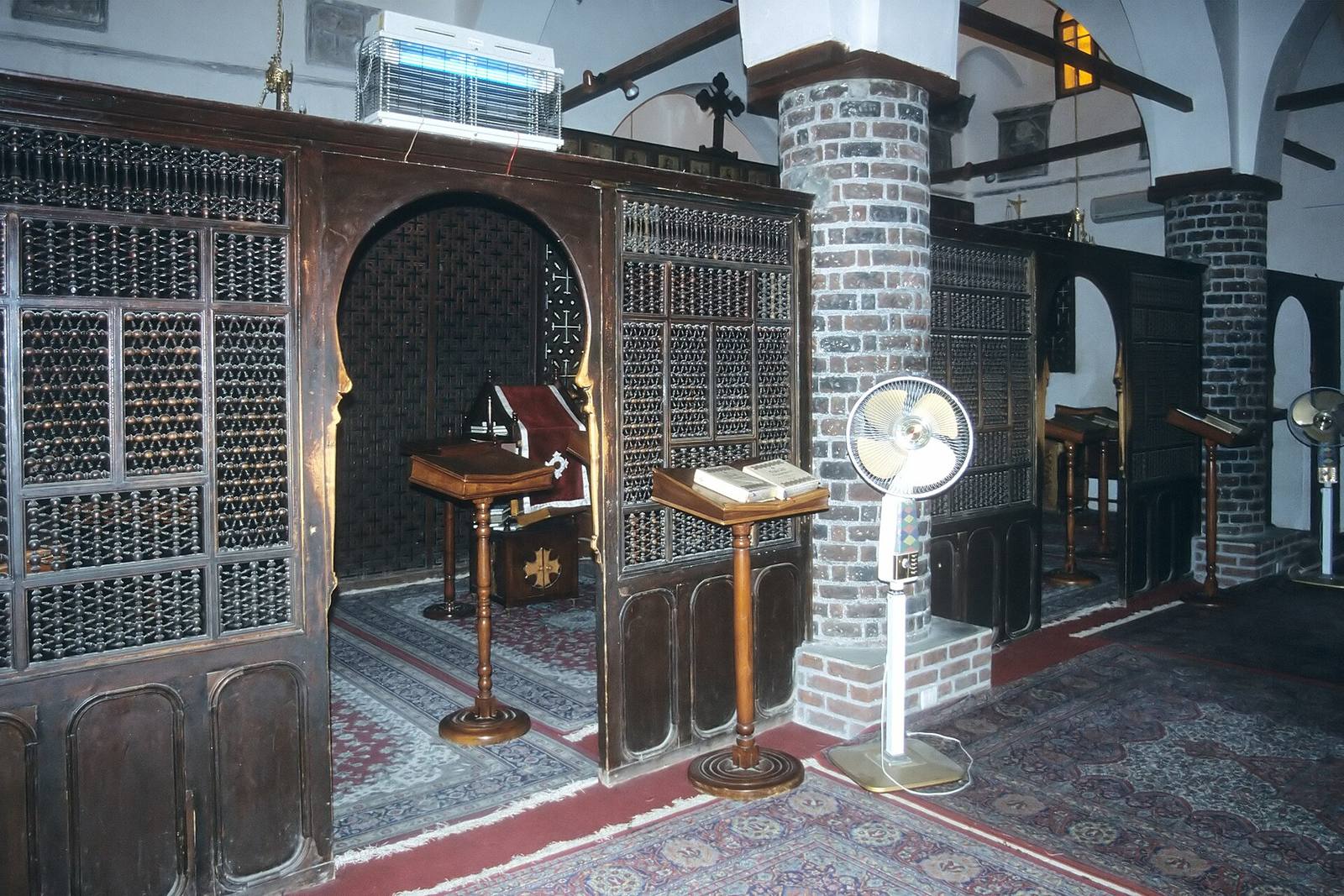
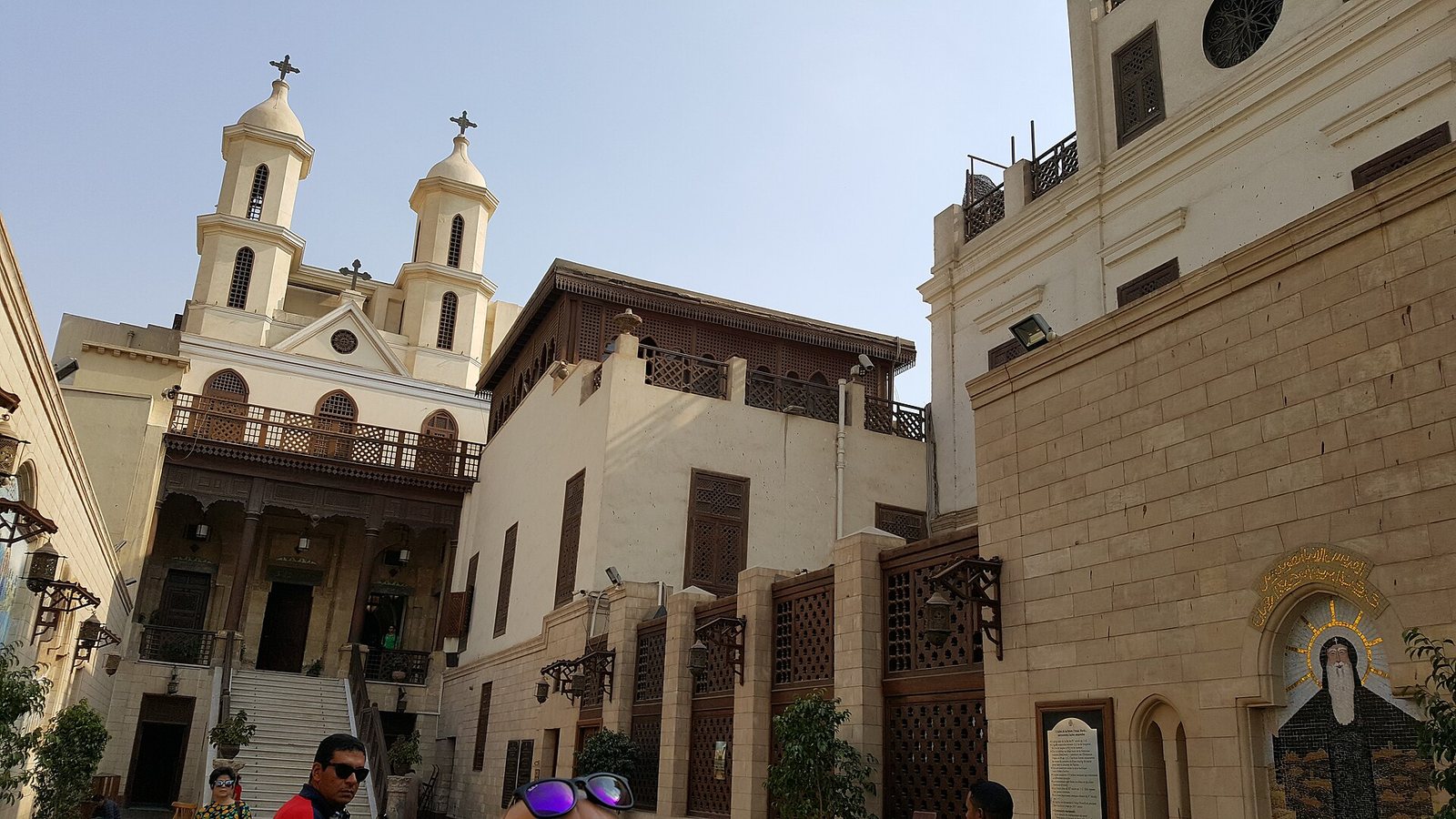
A full day in Old Cairo, the most concentrated stretch of early Christian heritage in the world. Abu Serga Church holds in its crypt the cave where, per tradition, the Holy Family rested on their journey. The Hanging Church of the Virgin is built directly over a Roman tower gate. Ben Ezra Synagogue marks, per tradition, the site where Moses was found in the reeds. The Coptic Museum holds the world's finest collection of Coptic art. The afternoon visits Matariya and the Virgin's Tree, a 2,000-year-old sycamore where the Holy Family is said to have sheltered.
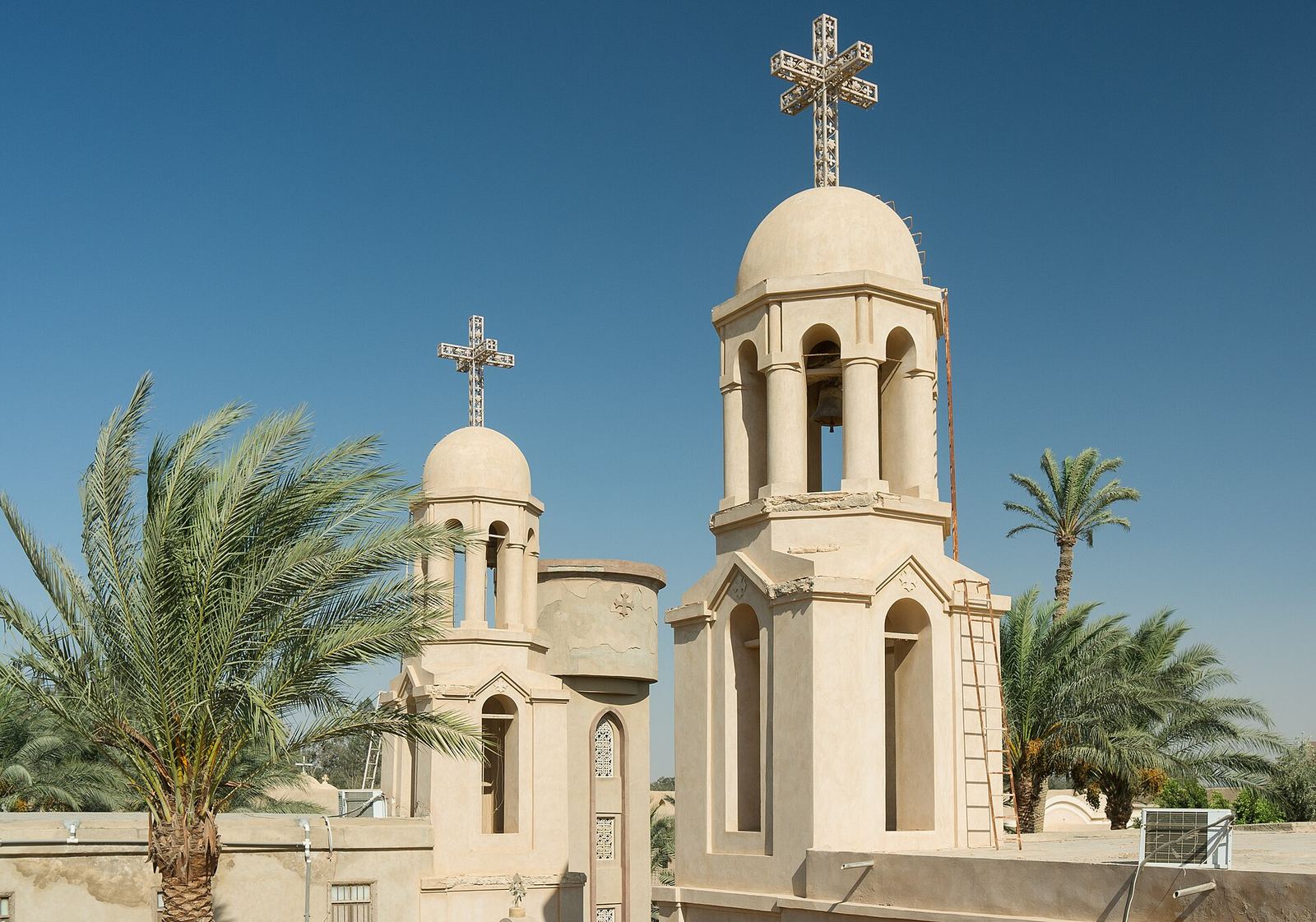
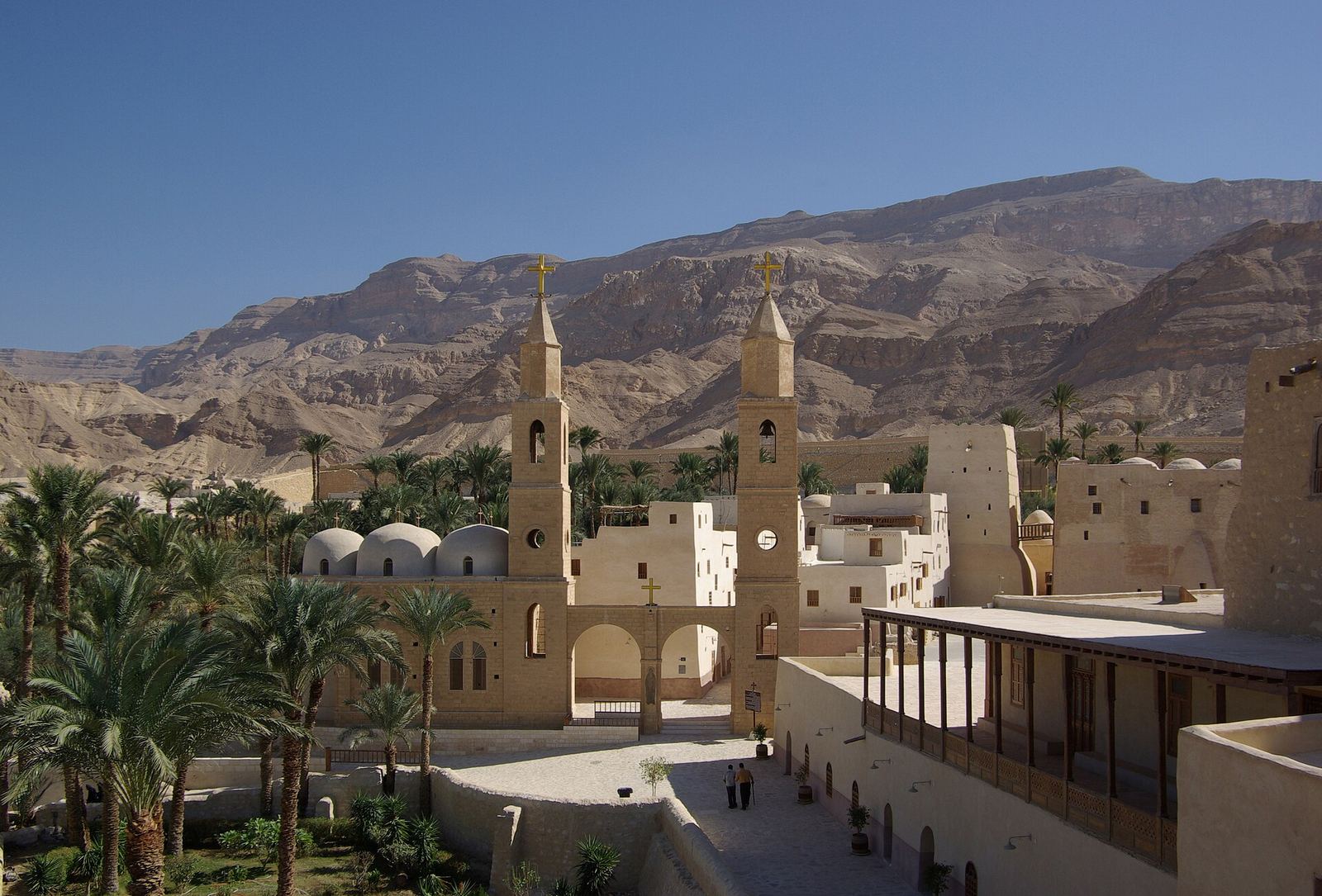
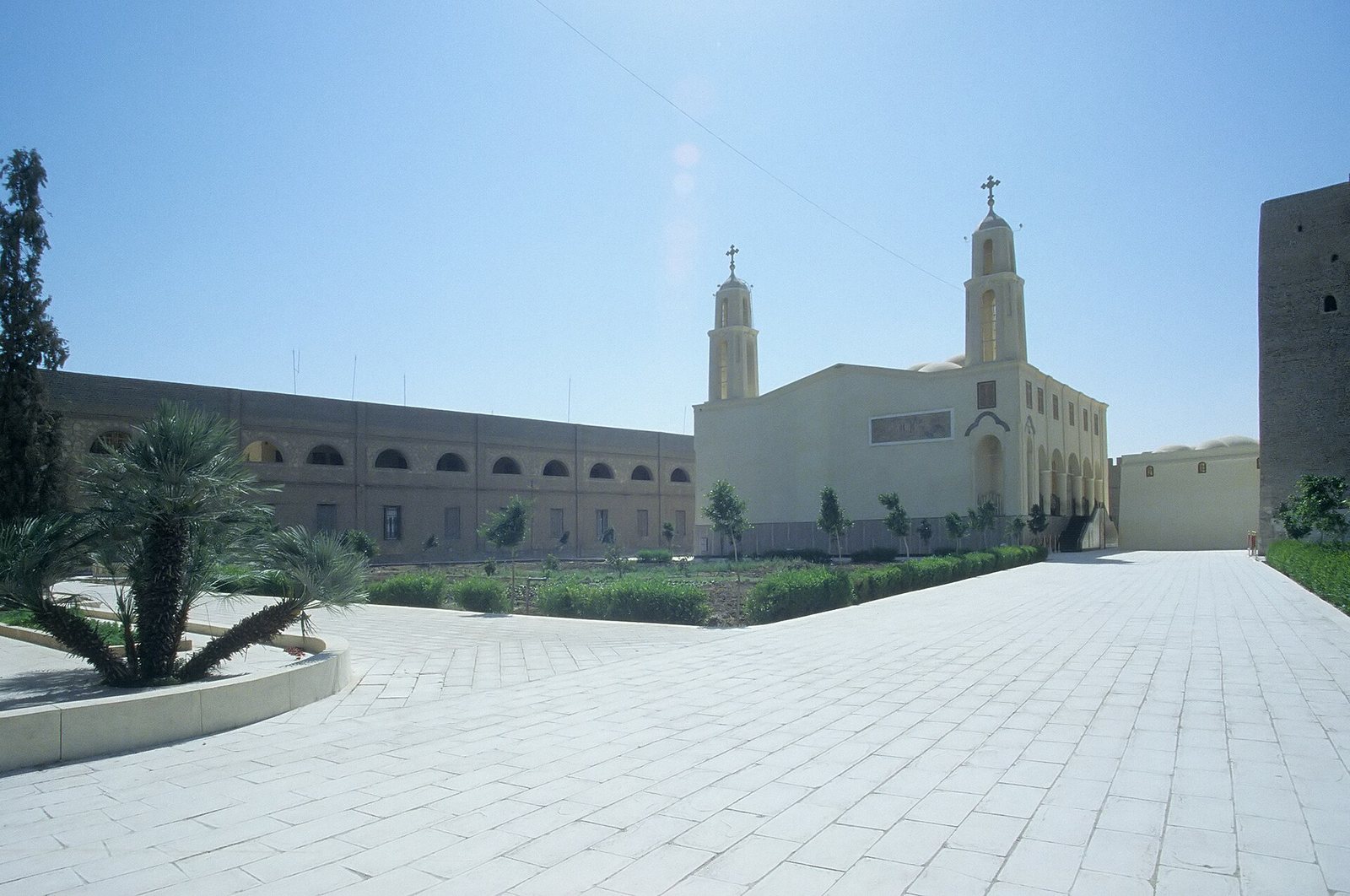
A full day in the desert valley that gave birth to Christian monasticism. The four monasteries of Wadi El Natrun were founded in the 4th and 5th centuries and remain active communities of monks today, unchanged in their essential character for 1,600 years. Each monastery receives visitors on weekday mornings, with your guide providing theological and historical context throughout. Return to Cairo in the evening.
Drive to Minya (3.5 hours south of Cairo), the gateway to Middle Egypt and a key point on the Holy Family route. Hermopolis Magna was the ancient city of Thoth and is connected to the Holy Family's passage through this region. The Beni Hasan rock-cut tombs are Pharaonic Middle Kingdom works with extraordinarily preserved painted interiors. Arrive Minya, check in, afternoon at leisure.
Drive to Asyut. Dronka's Cave Church of the Virgin Mary is cut directly into the cliffside and is one of the most important Coptic pilgrimage sites in Egypt, drawing over 800,000 pilgrims each August for a 15-day festival. Al-Muharraq Monastery is a major pilgrimage centre, claimed by tradition to be the site where the Holy Family stayed for six months at the furthest point of their Egyptian journey. Afternoon at leisure in Asyut.
Drive to Luxor (3.5 hours). Luxor Temple was begun by Amenhotep III and substantially expanded by Ramesses II; within the temple stands a remarkably preserved early Christian chapel built by the first Christians to convert this sacred space. The Karnak Temple complex is the largest ancient religious site ever built, layering 2,000 years of continuous Pharaonic construction across a vast sacred precinct.
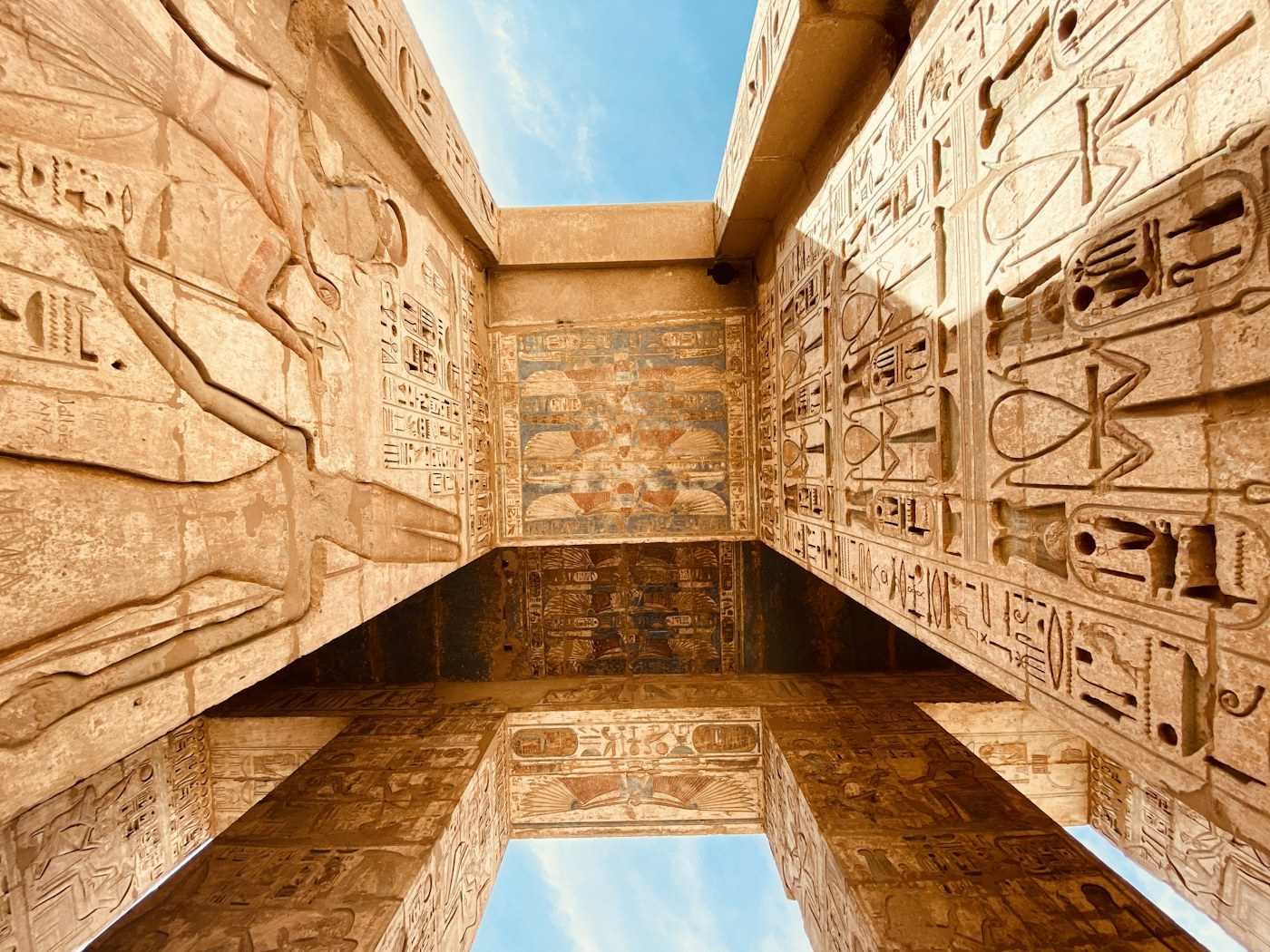
Luxor's West Bank is the ancient world's greatest necropolis. The Valley of the Kings holds 63 royal tombs carved into limestone cliffs; the wall paintings remain strikingly vivid after 3,200 years. Hatshepsut's mortuary temple at Deir el-Bahari is architecturally unlike anything else in Egypt. Medinet Habu, the mortuary temple of Ramesses III, is one of the best-preserved temples in Egypt and includes a Coptic church built within its first courtyard in the 5th century, a direct material connection between the Pharaonic and Christian worlds.
Hotel breakfast and check-out. Transfer to Luxor airport for an early flight back to Cairo, or private transfer by road depending on your schedule. Final private transfer to Cairo International Airport for your international departure.


Extend the Luxor leg with a Nile cruise from Luxor south to Aswan and Abu Simbel, completing one of the world's most iconic river journeys alongside the Coptic heritage circuit.
Add St Catherine's Monastery and the Mount Sinai ascent at the end of this tour, creating a complete Egypt pilgrimage from the Nile Delta to the Sinai peninsula (2 extra days required).
Add a flight from Aswan to Ramesses II's colossal rock temples at Abu Simbel if the Nile cruise extension is taken, combining the Coptic and Pharaonic highlights of Upper Egypt.
Spend a night at one of the monasteries as a retreat guest, subject to availability and prior permission from the monastery community. An exceptionally rare and peaceful experience.
Fly from Cairo to Amman and cross to Jerusalem for a combined Egypt and Holy Land pilgrimage, making a 12-day itinerary that traces the sacred geography of the ancient Near East.
An enhanced private tour of the Coptic Museum in Old Cairo with a specialist Coptologist, covering the manuscript collections, textiles and iconography in depth beyond the standard visit.
Not at all. The Holy Family route is a fascinating historical and cultural journey through Egypt's oldest communities, regardless of faith. Many of our guests on this itinerary are historians, archaeologists, or travellers interested in the intersection of ancient Egypt and early Christianity.
Yes. All four Wadi El Natrun monasteries welcome visitors on weekday mornings (most close to visitors on Sundays and during major Coptic fasts). The monastery communities ask for respectful dress (shoulders and knees covered) and quiet behaviour. Our guide coordinates all monastery protocols in advance.
Dronka in Asyut is one of Egypt's most important Coptic sites. The cave is believed to have sheltered the Holy Family during their time in Upper Egypt. Each August, during the Feast of the Virgin, over 800,000 Coptic pilgrims travel to Dronka for a 15-day festival, one of the world's largest Christian gatherings.
Moderate. There is walking at temple and monastery sites, some of which are on uneven terrain. The Dronka cave involves a short climb. All other sites are easily accessible for older or less mobile visitors. Please inform us of any mobility requirements when booking.
Yes. Luxor is included to complete the journey, as it lies on the traditional Holy Family route. Karnak, Luxor Temple and the West Bank add an important Pharaonic dimension to the Coptic and Islamic layering of the tour, and Medinet Habu specifically contains a 5th-century Coptic church built within the ancient temple precinct.
Yes. A Jerusalem extension (fly Cairo to Amman, cross to Jerusalem) can be added at the end of this tour, making a 12-day Egypt and Holy Land pilgrimage. Contact us for combined pricing and itinerary details.
Shoulders and knees must be covered at all times. We recommend loose-fitting, full-length clothing in a neutral colour. Shawls and scarves are provided for guests who need them.
Yes. This itinerary is ideal for parish groups, church delegations and interfaith study groups of any size. We have experience organising group pilgrimages of 8–60 people on this route. Contact us for group rates.
Following the path of the Holy Family is a profound and moving experience through living faith.
One of the world's most layered historical routes, spanning 4,000 years of worship and culture.
Parish and interfaith groups of any size; specialist group pricing and logistics available.
Egypt's Coptic, Jewish, Islamic and Pharaonic heritage in a single intelligent journey.
Every journey we build is private, guided and crafted around you. Tell us your travel dates and group size and we'll send you a personalised itinerary within 24 hours.